Emma Harake Emma Harake

  • Home
  • comics
  • Work
  • Contact
  • Home
  • comics
  • Work
  • Contact

2017 - 2020

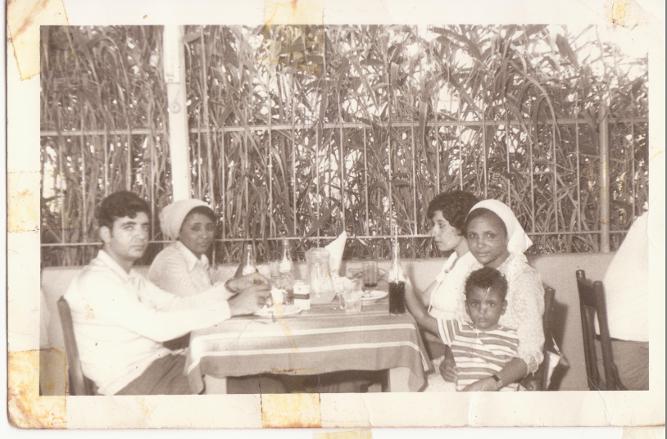
Working with a limited and damaged corpus of family photographs, I approach the image as a contested site rather than a transparent container of memory. I treat each photographed body, whether kin or accidental bystander, as caught within larger regimes of visibility and disappearance.

In these images, the family album becomes an unofficial archive: incomplete, biased, and haunted. Like Roland Barthes’ punctum, details erupt from the photograph not as sentiment but as wounds, evidence of what exceeds representation and resists closure. By weaving speculative narratives and imagining alternative settings, I expose memory not as a stable inheritance but as a political construction shaped by loss, authority, and silence.The act of looking at family photographs here is inseparable from histories of displacement where the private image is never fully detached from collective catastrophe.


Family Portrait | Absence

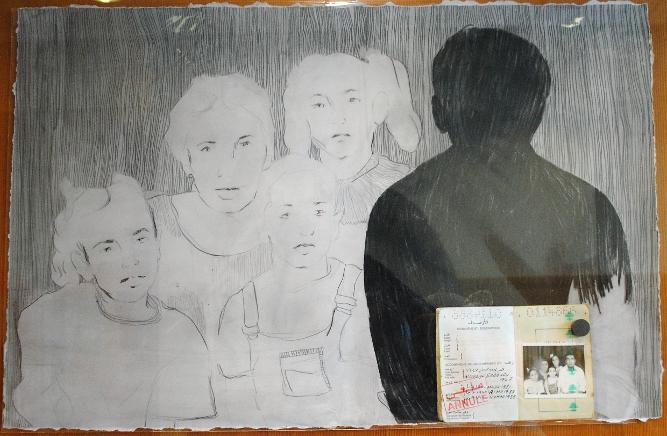
Most of the photographs in my family album were taken by my father. His position behind the camera granted him quiet authority: the power to frame, to include, and to exclude. No photograph captures all five of us together - except for a passport photo, produced not for intimacy but as a bureaucratic instrument of the Lebanese state.

I was eleven when my father died. His face did not vanish suddenly; it eroded slowly, mediated through black-and-white images that function less as remembrance than as evidence of loss. Absence here is structural: produced by death, bureaucracy, and the selective memory of archives.

The photograph does not restore presence but documents the precarity of narrative continuity in Lebanon. It exposes what remains unseen: the gaps of family, city, and nation, challenging the assumption that family photography is private and revealing how intimate archives intersect with histories of power and erasure.


The Sea Is A Village

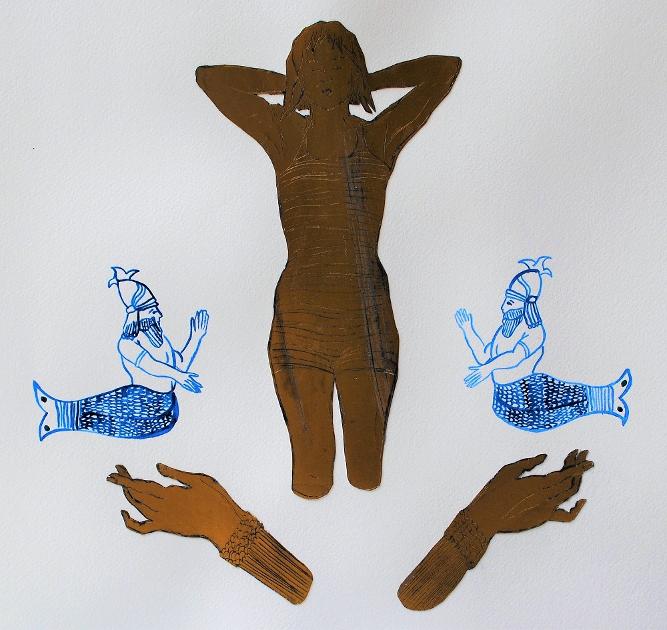
A fight erupted between my sister and brother as my mother was trying to capture a picture of us three playing on the beach. This photograph was meant to record a moment of familial harmony. Instead, it captures fracture. At the same moment, a stranger entered the frame, fixing her hair before leaving the water, unaware that she would become permanently embedded in our family archive.

This accidental intrusion destabilises the image’s claim to coherence. The stranger’s body appears without consent yet cannot be erased. Meanwhile, my own body turns away from the camera, facing the sea. Beside me lies what appears to be an empty Soha water bottle, a banal object of consumption. At six years old, I used such bottles to write messages to sea creatures, sealing them and casting them into the water, a gesture of address in a space governed by uncertainty.

The Mediterranean emerges here as a charged political terrain: a site of crossing, containment, and erasure. Lebanese postwar coastal development, privatized beaches, and militarized maritime borders shape who can occupy the sea and who remains invisible. Boats carrying displaced populations navigate these waters perilously, often unseen. In this context, the sea, once a site of childlike imagination, becomes a horizon of political tension, linking the gestures of a child to the structural precarity of refugees, the policing of public space, and the enduring legacies of colonial and postcolonial power.


Make a free website with Yola